Showing posts with label canine hip dysplasia. Show all posts

2/4/13

Looking Forward, Looking Back


Here at our house, we didn't exactly ease into the new year. As we entered 2013, we already had our dog, Zoe's orthopedic surgery date on our January calendar, as well as Rick's consultation with a surgeon for hernia repair, and we were waiting for results of a breast biopsy I'd had two days after Christmas. 

I got my breast cancer diagnosis on January 2, Rick had his surgery on January 11 and we took Zoe for hers on January 16.

Zoe the day after her "femoral head ostectectomy"

On January 24, one of our cats, who we adopted from the shelter a year ago, went missing. We've plastered the neighborhood with flyers, posted her picture on lost pet websites and contacted the shelters, but still no sign of Sasha.
 

Last week, which was the last week of January, Rick had his followup with his surgeon on Tuesday and got a good report after two weeks of trying to remember not to lift anything over ten pounds and laying off running, which was making him stir crazy.

The next day, Wednesday, I had lumpectomy surgery

Friday, Rick and our son, Paul, took Zoe for her followup and to get her 21 surgical staples removed. She is doing well, but still needs a lot of rehab, mostly in the form of daily walks. It will probably be another 5-6 weeks before she's fully recovered and we can consider surgery on her other hip.

Also on Friday, I got a call with the best news possible from my pathology report. The margins of tissue around my tumor were free of cancer, as were my lymph nodes. It was such a relief to know I wouldn't be going back for a second surgery.
 
Me with Kelly and my dad on Saturday after my surgery

Our daughter, Kelly, has come and gone. We had a wonderful weekend with her and look forward to our younger daughter, Erika, arriving late tomorrow night from Iowa. 

I've also enjoyed visits from my dad and from my friend, Jennifer, a breast cancer survivor twice over.

It was wonderful to go to church yesterday to worship the Lord with dear friends, who've been praying for me.

We're having gorgeous weather, perfect for taking Zoe out for walks and for Rick to gradually resume running.

I am driving again and going on short outings and errands, resting a lot, and using over the counter ibuprofen and acetaminophen as needed for pain. I have prescription pain medication, but haven't taken that, or felt I needed to, since my first night home.

Next Tuesday I'll have my two week followup with my surgeon where I expect to get more detail from the pathology report and a referral to a radiology oncologist. I plan to return to work Wednesday of next week, so my appointment with the oncologist will be sometime after that. 

I can't start radiation treatments until I'm completely healed from surgery, which probably won't be before the end of February. I think I'll most likely have radiation treatments five days a week for five to seven weeks. At some point, probably after radiation is finished, I'll be starting on the anti-estrogen, drug, Tamoxifen.

But for now, I'm just looking forward to a week of enjoying Erika's company and, if the forecast is correct, more beautiful weather. 

Flowers from my employer

1/26/13

All Creatures of Our God and King


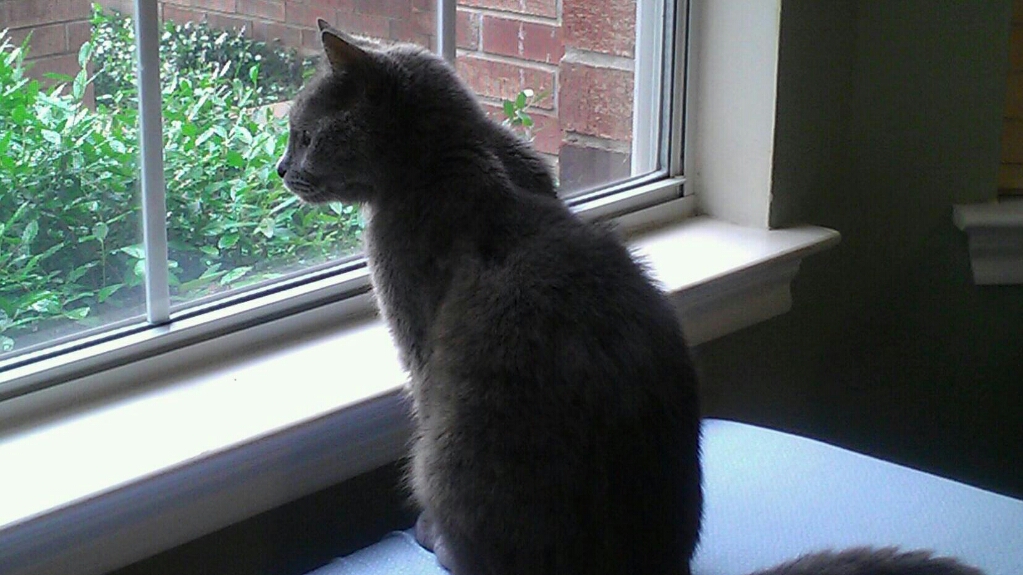
I've been thinking that if God's eye is on the sparrow, His eye is also on little cats who are out trying to catch sparrows for lunch.  Thinking about that is comforting to me and encourages me to keep praying for our little lost cat. I keep calling her little, because she only weighs about five pounds and that's how I think of her.
She's little like Granny from the old Beverly Hillbillies show was little, though. She's old and bold, small and scrappy, a survivor. She thinks humans exist to meet her needs and I have no doubt that when she feels a need, she'll approach a human and loudly demand to have it met. Anyone who tried to take her in would probably be getting more than they bargained for.  I think of Sasha as our cat, but she's only been our cat for one of the more than ten years of her life. We're glad at least that the weather has been so nice since she went missing.


Since Sasha left, Gypsy, our mixed breed dog who we also brought home from the shelter, has taken up an interesting habit. She's been lying on the back patio a lot, eyes wide open, scanning the area where she may have last seen Sasha go through a hole under the fence. Gypsy is probably nine or ten years younger than Sasha. She must have a lot of some herding breed in her, because she has strong herding instincts. She doesn't accept the fact that you can't herd cats and she never stops trying.


Sasha tended to bully Luna, so I'm not sure Luna misses her very much.


Meanwhile, we're pleased with how well Zoe is doing after her surgery. If she were human we'd recognize her surgery as a much bigger deal than either Rick's recent hernia repair or my upcoming lumpectomy - more physically traumatic and harder to recover from. We're getting her out for walks daily, increasing the time gradually, and she's slowly starting to bear more weight on that hind leg. We're still giving her pain medication daily and keeping a close eye on her to try to prevent her from hurting herself by falling or jumping.


With Sasha gone, Penny is once again the senior pet in the household. She's the leader of the dog pack anyway and hanging onto that position by a thread. It's a tiring job, but someone has to do it.


These animals add so much to our lives.

All creatures of our God and King,
Lift up your voice and with us sing...

 Let all things their Creator Bless,
And worship Him in humbleness

- Francis of Assisi


1/12/13

Hernias and Hip Dysplasia and Cancer, Oh My!

One of the greatest blessings God has given me since I was diagnosed with breast cancer ten days ago is the perspective of dear friends who've been through this experience.

Some of the most helpful advice I've received was,

"Take your time with asking questions and doing research. It's important. I know that after you get the diagnosis you feel you need to get on with the surgery yesterday, but really you have time." 
 "I think you are wise to get Rick's and the dog's surgeries out of the way. You have time to get your ducks in a row."

Although I don't think I'll ever have my ducks in a row, this was very reassuring advice. Before I got my diagnosis, we were already planning for Rick to have a long overdue hernia repair and had also scheduled surgery for one of our dogs.

I had enrolled in a lower deductible medical plan for 2013, mainly because Rick needed surgery, so we had scheduled his consultation with the surgeon early in the new year. Because he is self employed, he is covered under my employer's medical plan. When we got my diagnosis, his first inclination was to put his surgery on a back burner, but I thought we had already delayed it longer than we should have.

So Thursday of this past week, he went with me for the consultation with my surgeon and Friday I took him for his hernia surgery. It seems to have gone very well and he is resting at home. 

This Monday, I will have my MRI and then wait for results which will tell me whether I'm a candidate for lumpectomy or will need mastectomy. Wednesday, we plan to go ahead with Zoe's surgery.

I'll probably schedule mine the following week if it's lumpectomy, maybe the week after if it's going to be mastectomy with reconstruction. That way Rick will have had ten days or more to recover and we will be able to take good care of Zoe for at least her first week after surgery. Of course none of this is very predictable, but that's our tentative plan.

I already feel more peace knowing that Rick has had his much needed hernia repair. And although factoring a dog's medical needs into all this might sound crazy, people who've ever loved a pet might understand. Once I'm dealing with my own surgery and recovery, it would make me feel so much worse to be watching my sweet dog suffering and falling on the floor when her legs collapse under her. I think it will help my frame of mind to know that we've started the process that we hope is going to extend her life beyond her seven years and improve her quality of life. After all, a breast cancer patient needs her therapy dog(s)


And speaking of getting my ducks in a row, sometime before I go in for surgery, I hope to make time to clean the house!

12/29/12

For Love of a Dog

Zoe honestly came in from the backyard one day with this Plumbago flower stuck just so.


Rick and I have made a decision about surgery for Zoe. It's interesting how decisions about medical care for pets can be so complex. People can be quick to judge others' allocation of money to care for their pets, speculating about how much good could be done for needy human beings with those funds. I sometimes wonder why the same people don't make those judgements about others' decisions about spending on things like electronics, furniture, vacations, cars or hobbies.

We are solidly in the middle class and have had some financial setbacks as Rick's business slowed considerably during the recession. And giving to help human beings in need is just part of our lifestyle as Christians. But when we get a pet, we see that as a commitment to take care of that animal, exercising reasonable stewardship according to our means. Our Weimaraner, Dusty, lived to be fifteen and our Labrador, Shadow, made it to thirteen, both outliving the average life expectancy for their breeds.

Zoe is a French Brittany (Epagneul Breton,) a breed with an average life span of  12-13 years. She has hip dysplasia that has progressed very quickly and at the age of seven years, she lives with a lot of pain. Her back legs frequently collapse and she falls down hard. She can't keep her footing on smooth floors at all. But she gets some traction outside and still loves to go for her walk. I guess the endorphins kick in because she walks fast, if somewhat awkwardly, out ahead of our other two dogs when we take them all out together.

It's pretty clear to us, though, that if we don't do something for her, we won't be able to maintain her quality of life for very much longer. And we just love her. She's sweet, affectionate, loyal and loveable. The neighborhood kids call her "The Lickster," because she can't keep her tongue to herself.

We've always assumed that total hip replacement was the only surgical option and that was just not within the bounds of what we consider reasonable stewardship of our resources. If we had unlimited financial resources we'd do it in a heartbeat.

We recently learned of another option, considered more of a "salvage" surgery, that should greatly reduce her pain, increase her mobility and improve her quality of life, even if it won't make her hips as "good as new." It's called "Femoral Head and Neck Ostectomy," and will involve removing the ragged tops of her femurs and smoothing them out. Scar tissue is supposed to fill in and form something almost like a joint. We've now talked with three veterinarians who agree that Zoe's hips are very, very bad and that she should be a good candidate for this surgery.

She'll have to have one hip done at a time, so we've scheduled her first surgery for mid-January. It's going to be hard on her and hard on our budget, but we think it's our best option and that we can all manage it.

12/9/12

The Last of the Purebred Puppies


Zoe in 2005
This is Zoe when we brought her home in December of 2005. Wasn't she adorable? She's still sweet as can be at seven years old and we love her dearly. I hate to say never, but I think she's the last purebred puppy we'll ever buy.
 
She's a French Brittany. We bought her from a friendly breeder who seemed to have nothing to hide. We went to his home, met his family and saw both of Zoe's parents.  We scrutinized her pedigree going back several generations and saw no evidence of inbreeding as far at we two laypeople could tell.
 
Zoe has hip dysplasia, which showed up pretty early in her life and now at the age of seven, she lives with a lot of pain and her back legs frequently collapse out from under her on smooth floors. We wonder how long we can maintain her quality of life. I had assumed that since hip dysplasia is supposed to be more common in larger dogs, that a French Brittany would be less likely to develop it. Zoe weighs about thirty five pounds, which is average for females of her breed.


Until our newest dog, every dog Rick and I have ever owned was a purebred purchased as a puppy from a home breeder. When we were young, we would just decide what breed we wanted and then look in the classified ads for puppies for sale.   


Max as an adult with Dusty as a puppy in 1976.


Rick had a fox terrier growing up, and so that's the breed we chose for our first dog. Sadly, Max's life was short. If we had been older and wiser he might have had a better chance at a longer, happier life. A male fox terrier was not necessarily the best choice for a household with small children.


Ten year old  Erika, with 14 year old Dusty in 1990.
Our Weimaraner, Dusty, was destructive and hyperactive into her old age, but she took whatever the kids dished out without a hint of aggression.

We bred her with a neighbor's male Weimaraner just once, sold her puppies, then had her spayed with some of the profits. I suppose that made us backyard breeders, except that Dusty and her puppies lived in the house.

Dusty had heart worms when she was young and her treatment was expensive for us and dangerous for her. We learned our lesson about heart worm prevention, but thankfully Dusty came through the experience just fine.

She was hardy and healthy and lived to the ripe old age of fifteen when she spared us any painful decisions by dying quietly in the backyard on a sunny Sunday afternoon.

After Dusty, I did a lot of research before deciding what breed to get for our next puppy. We still preferred  larger breeds and females, but now understood that Dusty's hyperactivity and destructiveness were typical traits of her breed, which we had been ignorant of when we bought her as a puppy. Maybe, I thought, with enough careful research, we could select a breed without those traits. In hindsight, I realize one thing I was still ignorant of was good breeding practices.

Paul and Erika with Shadow the day we brought her home in 1991

We bought Shadow, our black Labrador retriever, from a family who lived out in the Texas Hill Country. She was loveable and great with our now older kids.


Shadow retrieved the first ball we ever tossed her without any attempt on our part to teach her how to fetch. She lived to fetch tennis balls for the rest of her life.


Shadow,  1991


Once Shadow was past adolescence, she did turn out to be less destructive and hyper than Dusty had been.

But when she was still fairly young she began snapping at small children when they got up close to her face.

Before she was two years old we learned she had hip dysplasia, but it didn't progress nearly as fast as Zoe's has.


Shadow, 2002

 
Shadow lived to the age of thirteen when we had to have her put down because she was living with too much pain and too little  mobility.  We may have let her suffer longer than we should have, but anyone who's ever had to make that decision knows how difficult it can be.

Shadow lived longer and had more good years than we had hoped for after we learned about her hip dysplasia and we were thankful for that.

In looking back at her pedigree after she was gone, I noticed something I had forgotten: Her father was also her grandfather. The couple that bred her assured us that this was common practice to reinforce "good traits" and was safe, but now I wondered if this inbreeding had something to do with her hip dysplasia and her tendency toward snappiness, which I had not anticipated in a Labrador.


When we were ready to get our next dog, I made one visit to the Humane Society. I knew people who always adopted mixed breeds from shelters and I thought that was admirable, but after all a pet is a long term commitment. I wondered how you could predict the likelihood of serious problems with a dog whose breeding and background you knew nothing about. Getting a dog from a shelter seemed risky. I wanted as much predictability as possible.

We decided we would do what we had always done, buy a  purebred puppy. We knew we wanted a breed that was unlikely to be aggressive with children and a puppy that had not been inbred, so this time I was going to pay more attention to the pedigree. We weren't getting any younger, so we thought we should get a smaller dog this time. Also on my shopping list of desirable traits was "less doggy odor," "not a heavy shedder," etc, etc. I had taken on quite a consumer mentality about selecting a family pet.

Penny, 2005

 A Vizsla seemed like the perfect choice. We paid more for Penny than we had ever paid for a dog in our lives.


And she's everything we hoped she'd be, super-affectionate, great with children, no doggy smell, with a silky short coat and velvety ears.


Penny 2007

Then there's that earsplitting high-pitched bark when she gets excited, which is often, and her habit of jumping on people, which we just can't break her of. Oh well, no dog is perfect.

At seven and half years old now, she's healthy and energetic and we expect her to be around for a long time. We love her dearly.

(Edited to add: June 24,2014 Yesterday we had to have Penny euthanized after learning that she had cancer that had metastasized to her lungs. It was probably lymphoma which, as it turns out, is fairly common in Vizslas. We are heartbroken. She had just turned 9 years old. It's hard to believe I wrote the words above just 18 months ago. And two weeks ago, Zoe had her second hip surgery, a femoral head ostectomy)

After we'd had Penny a few months we decided we could handle a second dog and that it would be good for Penny to have a canine companion.


Zoe and Penny in 2011

The same kind of research that led us to choose a Vizsla also led us to choose a French Brittany. Zoe is just five months younger than Penny and didn't cost quite as much. They get along together beautifully.

Zoe is lovable, sweet and affectionate with us and with the children in our lives. Like every dog we've ever had, she has a few annoying habits, but what dog doesn't?

It's heartbreaking to see her living with pain and having a hard time climbing the stairs at only seven years old. Some things just aren't that predictable.


A year ago when I was making the rounds of shelters looking at cats, I couldn't help but notice all the dogs and somehow I felt differently about them than I had in my visit to the Humane Society seven years ago. I saw so many adult dogs that looked gentle and friendly, frightened and stressed. I couldn't help but think that if people like Rick and I only ever chose purebred puppies, dogs like these were doomed.
 
I thought about how quickly our own dogs' puppy days had been over and it didn't seem so important to only ever consider puppies. I thought about how we've learned that the health and behaviors of purebreds are not necessarily all that predictable.

The latest addition to our dog pack is a beautiful, loveable mutt who was about a year old when we brought her home from the city shelter.

Penny, Zoe and Gypsy in 2012


Rick and I aren't getting any younger and we probably don't have many more dogs in our future anyway, but  we bought our last purebred puppy when we bought Zoe. The key words here are "bought," "purebred" and "puppy." We won't purchase a dog again and contribute to the market for puppy mills and breeders when so many adoptable dogs are put down every day. We've learned that an adult mixed breed can make a wonderful pet. Too many of them never get a second look in the shelters because everyone wants a puppy and most people prefer purebreds. But even purebreds can be found in shelters and adopted from rescue organizations.
 
I had heard about the horror of puppy mills for years, which is why we at least always bought our purebred puppies from home breeders. This year I  actually "met" a product, or maybe I should say a producer, of a puppy mill. This is Rainbow Diamond. She was rescued in a raid on a puppy mill and taken in by "Diamond Dachshund Rescue." She is a patient of our veterinarian. She lived in a grungy bathtub where she was bred continuously despite a fractured spine that never healed. I don't know why any dog lover would want to be a consumer of this market, if they know about it, that is.
Web Image: Rainbow.jpg